
Alabama Court Records After Arrest
The Alabama arrest-to-court path starts with custody, then moves into the court record. A person is arrested, booked by a county jail or local holding agency, and listed in a custody system if the county publishes or releases that information. The prosecutor and court then control the formal criminal case. The booking charge can be a starting label, but the filed court charge can be amended, reduced, dismissed, or replaced as the case moves.
That split is why Alabama court records after jail arrest should be checked separately from custody records. Use the jail roster for where a person is held now, bond or hold information when the county publishes it, and basic booking details. Use the court record for charge status, court dates, disposition, fines, traffic or criminal case events, and sentencing. After sentencing, ADOC fields such as jail credit or minimum release date can connect back to the court case, but they do not replace the clerk's case record.
The Alacourt ACCESS / Just One Look portal is the statewide Alabama trial-court record portal identified for criminal, traffic, civil, and domestic records.
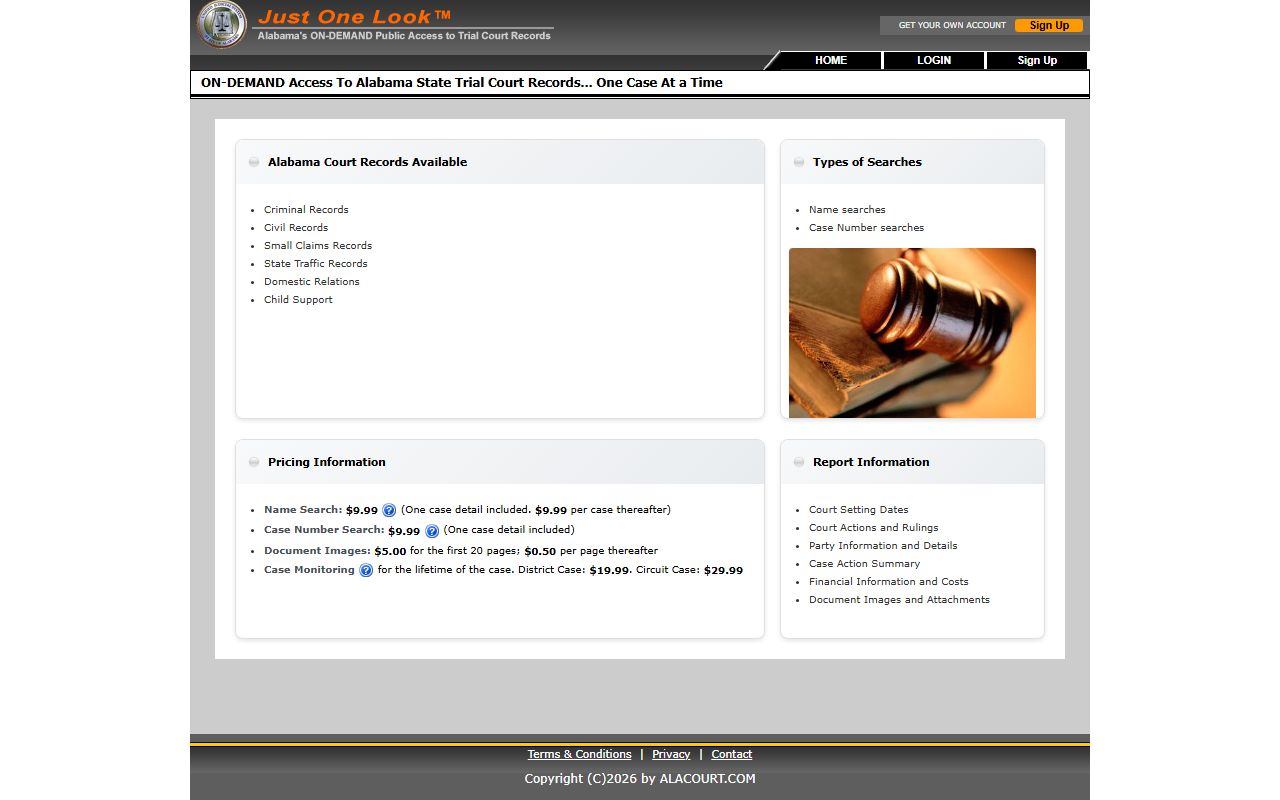
Use Alacourt or the clerk for case events, then use a jail or prison locator only for the custody side of the same matter.
Search Alabama Arrest Court Records
Alabama AOC sources identify Alacourt ACCESS / Just One Look as the public access route for state trial-court records. The e-filing source describes Alacourt.com as a subscription read-only application and Just One Look as a case-by-case public access option. Those details matter because a person may find the jail booking quickly but still need a separate court lookup to see whether the charge has been filed, changed, dismissed, or disposed.
For a current jail custody question, use Alabama inmate records and the county jail roster. For a case question, use Alacourt or the local clerk. The criminal case is usually tied to the county where the arrest, charge, or prosecution is pending. If the case is appealed, the Alabama Appellate Courts public portal is the statewide appellate search route found in the research.
| Record Need | Alabama Channel | What It Answers |
|---|---|---|
| Trial-court case | Alacourt ACCESS / Just One Look | Criminal, traffic, civil, and domestic trial-court records. |
| E-filed and read-only access context | Alabama e-filing information | Subscription read-only access and case-by-case public access context. |
| Appeal | Alabama Appellate Courts public portal | Appellate case search after a trial-court matter moves up. |
| Custody location | County jail, ADOC, BOP, or ICE | Where the person is held, not the final court outcome. |
Note: A court case record can outlast the jail roster entry, especially after release, transfer, dismissal, conviction, or appeal.
Charges After Alabama Jail Arrest
The safe statewide rule is simple: the jail records the booking, and the court record controls the formal case. The statewide research does not provide a full Alabama charging-document manual, so charging-document labels should be verified in the case file instead of inferred from a roster. When complaint, information, or indictment labels appear in a court record, read them as court-file materials and check the official case entry for the charge, status, and next event.
Charging language can change. An arrest entry may be broad or provisional. A prosecutor may file a different count. A grand jury process may affect the formal charge. A court may later show a dismissal, amendment, reduction, disposition, probation term, split sentence, or state-prison sentence. The jail roster alone cannot prove which court outcome happened.
| Document Label | Where to Verify | Why It Matters |
|---|---|---|
| Complaint | Alacourt or the clerk | Verify the filed accusation and case number rather than relying on the booking label. |
| Information | Alacourt or the clerk | Check whether the court record uses that label and what charge it lists. |
| Indictment | Alacourt or the clerk | Confirm the formal count, status, and case events shown in the court file. |
Alabama Charge Status Records
Charge status is the main reason to look beyond the jail roster. Jail custody data can show that a person was booked, held, released, or moved. Court status shows where the formal case stands. Alabama research points users to Alacourt for charges, case numbers, court dates, disposition, fines, traffic records, criminal records, and clerk or court events.
Bond and release status can touch both systems. A jail roster may show bond, no-bond, or hold details if the county publishes them. A court order may change release conditions. A hold from another agency, a state-prison transfer, federal custody, or immigration detention can also affect release even when a local bond entry is visible.
| Status | Plain Meaning | Record to Check |
|---|---|---|
| Pending | The charge or case remains open. | Alacourt or the clerk. |
| Amended | The charge changed after the initial filing or booking label. | Alacourt and the case file. |
| Reduced | The formal charge is lower or different than before. | Alacourt and the final disposition. |
| Dismissed | The court record shows that the charge did not proceed. | Clerk-certified case record when proof is needed. |
| Disposed | The case has a recorded outcome. | Alacourt or clerk, with sentence details if entered. |
After Sentencing Court Records
Once a person is sentenced to the Alabama state prison system, the custody search can move from the county jail to ADOC. ADOC defines jail credit as time spent in county jail before sentencing, prepared by the sentencing county's circuit clerk. ADOC also defines minimum release date as the earliest scheduled release date shown by ADOC, subject to change if good time is lost through disciplinaries or if new cases or sentence changes are sent by the circuit clerk.
The Alabama Bureau of Pardons and Paroles, not the jail roster, handles parole consideration questions. ABPP research says eligibility can depend on sentence, crime, jail credit, good-time eligibility, time served, and court orders. Alabama split-sentence and Correctional Incentive Time issues also come from the sentencing framework, court orders, and ADOC or ABPP administration. A public page should not calculate release dates from a roster entry.
The ADOC definitions page explains post-sentencing fields such as jail credit, minimum release date, parole consideration date, and parole status.
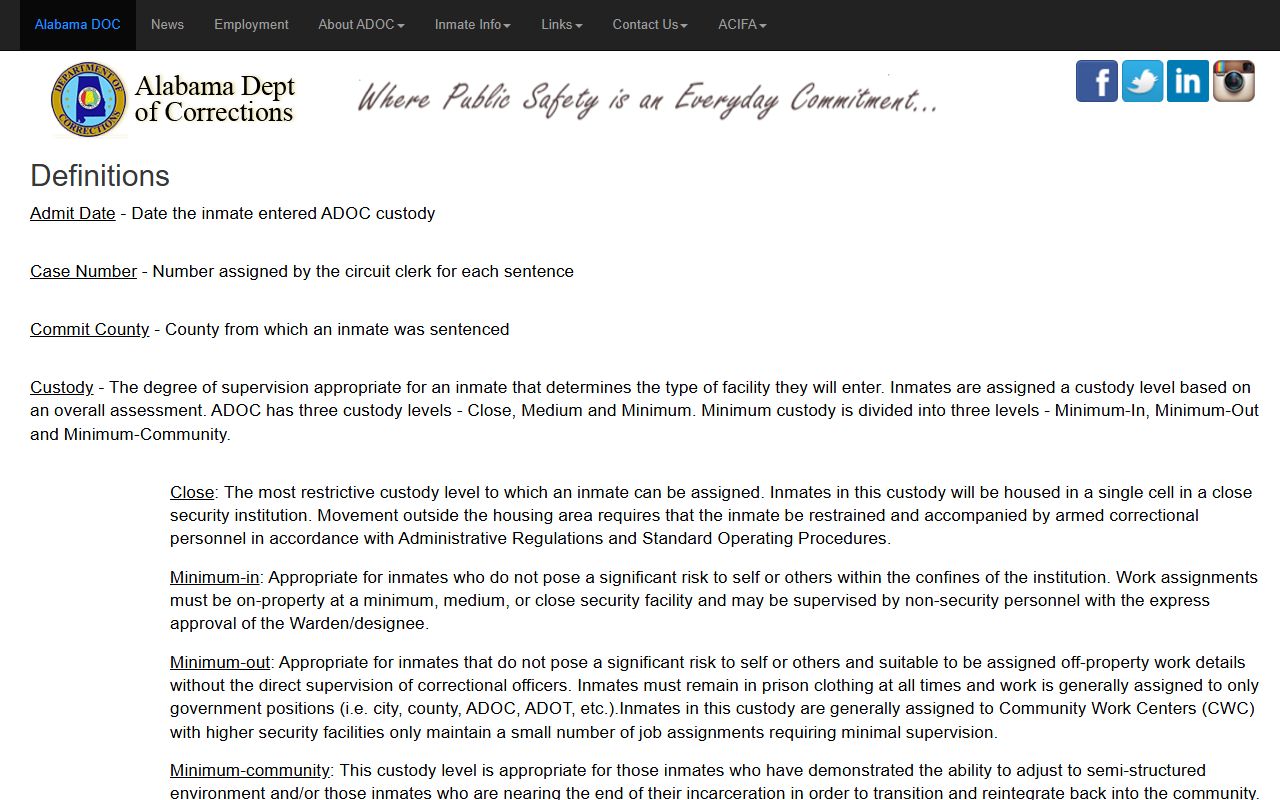
Those ADOC fields can help interpret a prison record, but the official sentence and case history still come from the court record.
Charges Versus Convictions
An arrest charge is not a conviction. A booking record can show why the person entered jail, and a court record can show the filed charge. A conviction requires a court disposition such as a guilty plea, verdict, or other judgment. Alabama court records after jail arrest are important because they let a user separate allegations, filed counts, amended charges, and final outcomes.
| Point | Charge | Conviction |
|---|---|---|
| Stage | Arrest label or filed count. | Court outcome or judgment. |
| Where found | Jail roster, Alacourt, or clerk record. | Court record and sentencing entry. |
| Meaning | Accusation or case count, not proof of guilt. | Official disposition that must still be read in context. |
| Custody effect | May affect bond or hold status. | May lead to probation, split sentence, county jail, ADOC, or other custody. |
The ADOC inmate locator is the correct public route only after the custody question becomes current Alabama state-prison custody.
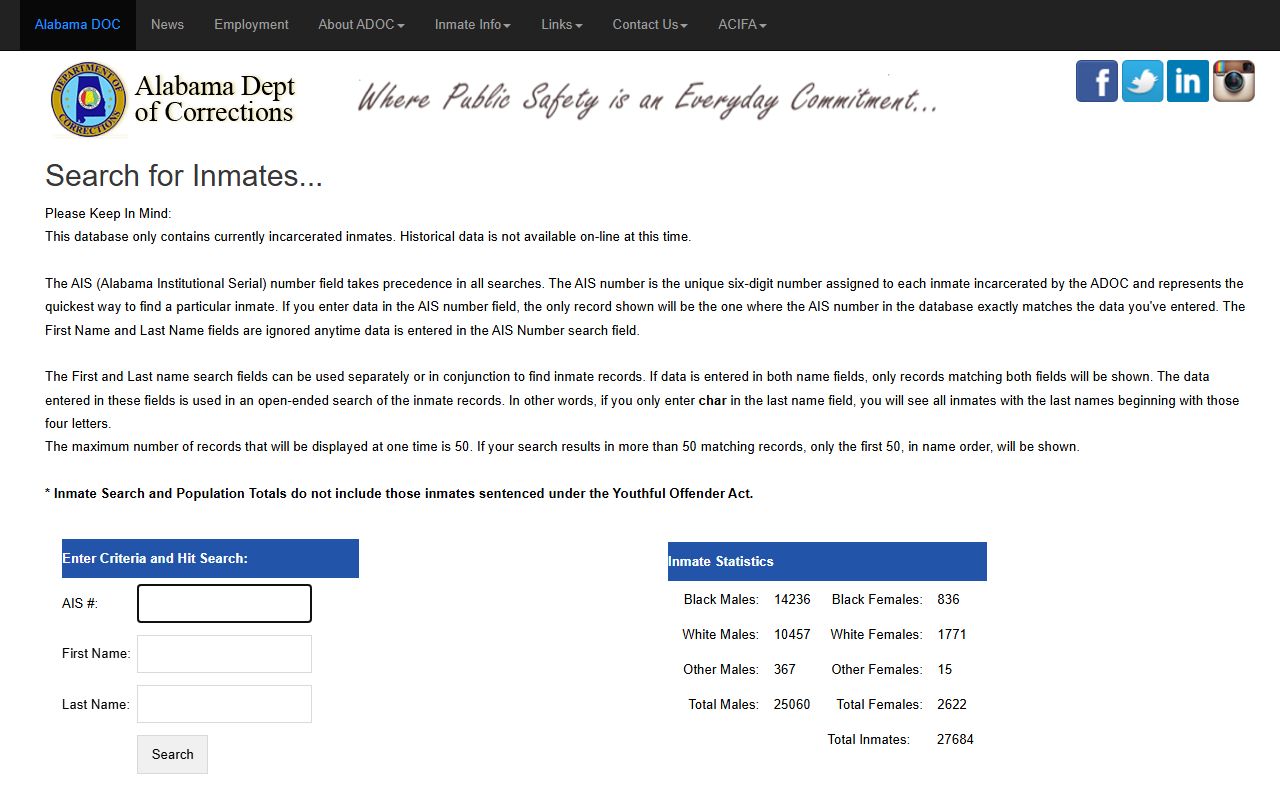
For a pending arrest case, the county jail and court record remain the better sources until ADOC custody begins.
Sealed and Expunged Records
Alabama public access has limits. The statewide research identifies juvenile records, Youthful Offender records, sealed records, expunged records, medical records, PREA-sensitive material, and active investigative details as categories that can be confidential, unavailable, withheld, or redacted. ADOC's own locator excludes Youthful Offender Act records from public search and population totals. Court and jail custodians may apply restrictions even when a related public entry exists elsewhere.
Expungement and restriction questions should be verified with the court or a licensed attorney. A public roster may not show the full case history. A commercial or copied booking entry may lag behind the official case status. For booking photos tied to the same event, use the Alabama jail mugshots page for booking-photo context and then verify any restriction with the official custodian.
| Category | Public-Access Concern | Best Route |
|---|---|---|
| Youthful Offender | Excluded from the ADOC public locator and totals. | Court or authorized custodian. |
| Juvenile or DYS | Youth custody is separate from adult jail and prison records. | DYS or juvenile-court route as allowed. |
| Sealed or expunged | May be unavailable or restricted from public display. | Clerk, court order, or legal counsel. |
| Investigative material | May be protected by Alabama law-enforcement records limits. | Originating law-enforcement agency. |
The Alabama Department of Youth Services overview shows that DYS runs a youth system separate from adult jail and prison custody.
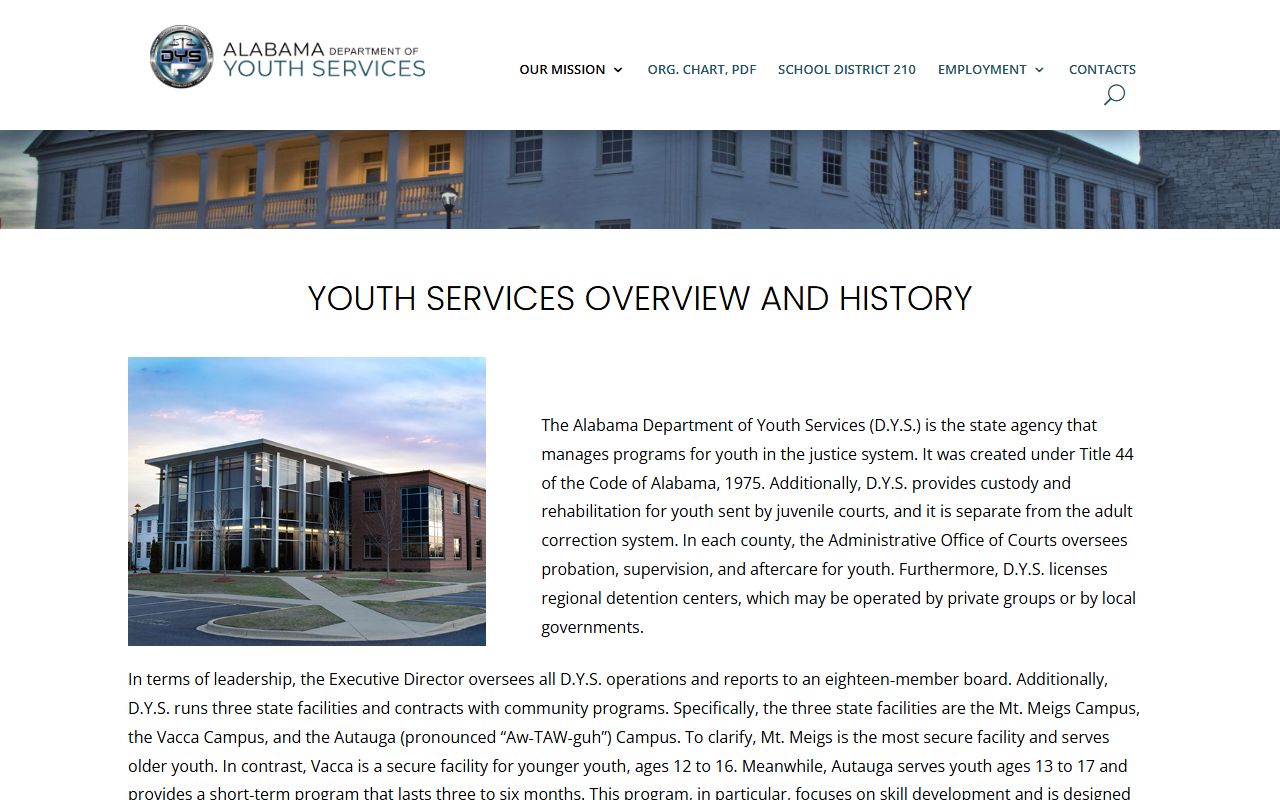
That separation is critical when an arrest, detention, or court matter involves a youth rather than an adult defendant.
Public Record Limits
Alabama's public-records framework includes Code Sections 36-12-40 and 36-12-41 for inspection and copies, plus Section 36-22-8 for the sheriff's prisoner record book. The research also flags Section 12-21-3.1 for law-enforcement investigative-material protections. These sources support public access to many records, but they do not make every file, photo, juvenile record, sealed record, or active investigative detail public.
Use the official record source for the question being asked. Court charges, case status, and dispositions belong with Alacourt or the clerk. Jail booking status belongs with the county jail. ADOC custody belongs with ADOC. BOP and ICE records are federal channels. Victim notification may involve VINELink, Alabama's Victim Notification System, the sheriff, ADOC, or ABPP depending on case stage.
Note: Verify a charge, disposition, sentence, or release issue with the official court or custodian before acting on it.